+91-9925390425
 +1-832-647-8304 (USA)
 info@papayacare.com
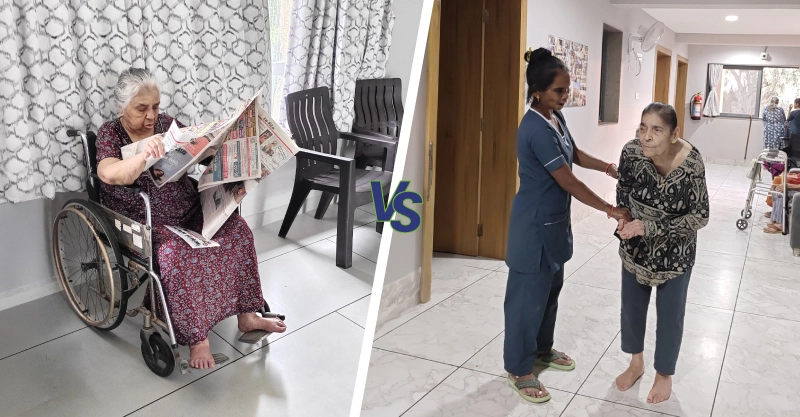
When parents grow older, families often try to manage care at home for as long as possible. For children living abroad in countries like the US, UK, Canada, or Australia, home care may initially feel like the most comfortable and emotionally safe option.
But as health needs increase, many families begin asking an important question:
Is home care really enough for long-term elderly support?
The truth is that home care can help with basic assistance, but there are several things it simply cannot provide consistently, the way a dedicated senior care facility can.
This article offers an honest comparison between home care and senior care facilities so families can make informed decisions for their ageing parents in India.
Understanding the Difference
| Home Care | Senior Care Facility |
|---|---|
| Caregiver visits the senior at home | Senior lives in a dedicated care environment |
| Limited support based on shift timing | 24/7 monitoring and assistance |
| Usually handled by 1–2 caregivers | Managed by trained teams and specialists |
| Home environment remains unchanged | Environment designed specifically for senior safety and comfort |
| Family manages coordination remotely | Facility handles complete daily care management |
What Home Care Cannot Consistently Provide
1. 24/7 Continuous Monitoring
Most home caregivers work in shifts or for fixed hours. Even with full-time attendants, supervision gaps can happen during:
- Night hours
- Caregiver breaks
- Emergencies
- Sudden medical episodes
For seniors with:
- Dementia
- Parkinson’s
- Stroke recovery needs
- Fall risks
- Mobility challenges
Continuous monitoring becomes extremely important.
A senior care facility provides:
- Round-the-clock staff availability
- Faster emergency response
- Continuous observation
- Immediate support during falls or health changes
This level of monitoring is difficult to maintain consistently in a regular home setting.
2. Specialized Medical Coordination
Home care usually focuses on assistance with:
- Meals
- Bathing
- Basic mobility
- Medication reminders
But elderly health often becomes more complex over time.
Senior care facilities can coordinate:
- Doctor consultations
- Physiotherapy
- Rehabilitation
- Memory care
- Nursing support
- Emergency escalation
- Recovery programs after hospitalization
For NRI families, this centralized coordination reduces constant stress and remote management challenges.
3. A Senior-Friendly Environment
Most Indian homes are not designed for aging adults.
Common home risks include:
- Slippery bathrooms
- Staircases
- Sharp corners
- Poor lighting
- Uneven flooring
- Lack of mobility support systems
Senior care facilities are intentionally designed to improve:
- Accessibility
- Safety
- Ease of movement
- Emergency response
- Fall prevention
This becomes especially important for seniors living alone.
Home Care vs Senior Care Facility: Safety Comparison
| Care Need | Home Care | Senior Care Facility |
|---|---|---|
| Fall monitoring | Limited | Continuous |
| Night supervision | Often unavailable | Available 24/7 |
| Emergency response | Delayed in many cases | Immediate support |
| Medical coordination | Family-managed | Facility-managed |
| Mobility support | Basic | Structured assistance |
| Memory care support | Difficult at home | Specialized programs |
| Social engagement | Limited | Daily interaction available |
4. Emotional Well-Being and Social Interaction
One of the biggest hidden problems among elderly parents living alone is social isolation.
Even when a caregiver is present, seniors may still experience:
- Loneliness
- Anxiety
- Reduced communication
- Emotional withdrawal
- Depression-like symptoms
In many homes, the day becomes repetitive and silent.
A senior care facility creates opportunities for:
- Daily conversations
- Community engagement
- Activities
- Shared meals
- Emotional support
- Human connection
This often improves emotional health significantly.
5. Consistency in Care
Home caregiving frequently depends on:
- Individual attendants
- Maid availability
- Local staffing reliability
Families often face issues like:
- Sudden leave
- Staff turnover
- Untrained attendants
- Inconsistent caregiving quality
Senior care facilities operate with structured systems and trained teams, creating:
- Better continuity
- Defined routines
- Professional supervision
- More reliable support
This consistency is especially valuable for families managing care from another country.
6. Recovery Support After Hospitalization
After:
- Surgery
- Stroke
- Fractures
- ICU discharge
- Major illness
Seniors often need more than simple home assistance.
Recovery may require:
- Rehabilitation
- Physiotherapy
- Mobility supervision
- Medication management
- Nutritional monitoring
- Nursing care
Home setups are not always prepared for post-hospital recovery.
Senior care facilities are better equipped to support structured healing and rehabilitation.
Why Many NRI Families Choose Senior Care Facilities
Children living abroad often face difficult realities:
- Different time zones
- Limited travel flexibility
- Career responsibilities
- Constant worry about parents living alone
- Emergency management challenges
A trusted senior care facility offers:
- Professional care management
- Regular updates
- Faster medical response
- Emotional reassurance
- Reduced caregiving stress for families abroad
It allows families to focus more on emotional connection instead of daily crisis management.
An Honest Truth: Home Care Still Has Benefits
Home care can still work well when:
- Seniors are independent
- Medical needs are minimal
- Family members live nearby
- Occasional assistance is enough
For early-stage aging support, home care may feel more familiar and emotionally comfortable.
But when health, mobility, memory, or safety concerns increase, families often realize that home care alone may no longer be sufficient.
When Should Families Consider a Senior Care Facility?
Families should seriously consider assisted living or senior care when:
- Parents live alone
- Frequent falls happen
- Medication management becomes difficult
- Dementia symptoms increase
- Recovery after hospitalization is needed
- Caregiver dependency becomes unstable
- Emotional isolation becomes visible
- Emergency response time becomes a concern
Early planning often leads to better outcomes and smoother emotional adjustment.
Final Thoughts
Choosing between home care and a senior care facility is not about replacing family love.
It is about ensuring:
- Safety
- Dignity
- Comfort
- Proper medical attention
- Emotional well-being
- Consistent support
For many NRI families, a professional senior care facility provides peace of mind that is difficult to achieve through home care alone.
The goal is not simply helping seniors live longer.
The goal is helping them live better.
Looking for Trusted Senior Care for Your Parents in India?
Speak with PapayaCare today to understand the right care option for your loved ones.

Call / WhatsApp

International / NRI

FAQs
1. Is a senior care facility better than home care?
2. Is assisted living safe for elderly parents in India?
3. How do NRI families manage elderly parents in India?
4. What services do senior care facilities provide?
- Assisted living
- Dementia care
- Physiotherapy (Ortho Care & Rehabilitation)
- Medication management
- Recovery care
- Nursing support
- Daily assistance
- Wellness programs