+91-9925390425
 +1-832-647-8304 (USA)
 info@papayacare.com
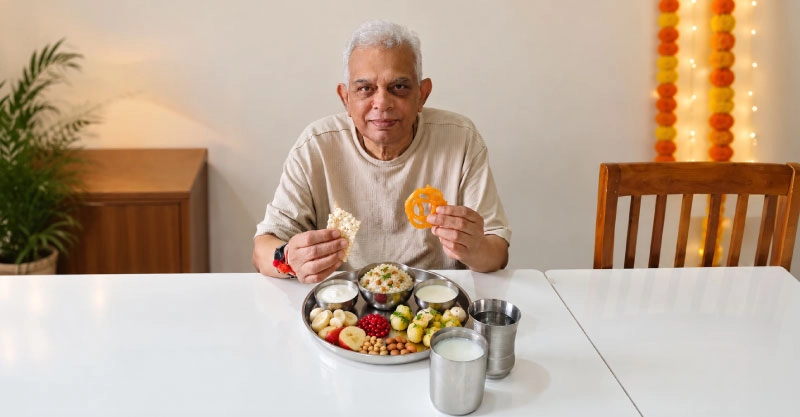
For many of our parents, Navratri is the most cherished time of the year.
The house is cleaned. The ghat is established. The lamp burns for nine nights. Somewhere outside, the dhol starts, and even an eighty-year-old foot begins to tap.
For a generation that has kept vrat faithfully for fifty or sixty years, being told to stop feels like being asked to give something up. So this article is not about giving anything up. It is about how a parent can keep their vrat, and their strength, together.
What Our Tradition Already Says
This is worth remembering before any medical advice, because our own shastras got there first.
- Upvas comes from upa and vas, to sit near. To dwell close to the Divine. Hunger was never the point of it. Nearness was
- The Bhagavad Gita, in the sixth chapter, teaches that yoga belongs neither to one who eats too much nor to one who abstains completely. Moderation is the path
- Our dharmic tradition has always exempted the unwell, the aged, children and expectant mothers from strict vrat. This is not a modern concession. It is written into the tradition itself
- Ma Durga is invoked as mother before anything else. No mother is pleased by a child who harms themselves in her name
A vrat kept gently is a full vrat. Devotion has never been measured in missed meals.
Who Can Usually Fast Comfortably After 70
Many seniors can, and should be encouraged to. If your parent is:
- In generally good health with no chronic illness
- Not on diabetes medication or insulin
- Steady on their feet, with no recent falls
- Eating and sleeping normally in the weeks before
- Able to drink water freely, with no fluid restriction
- Not recently hospitalised or recovering from surgery
Then a traditional vrat, with fruit, milk, water and farali food, is usually well within their reach. Keep water going through the day and let them rest in the afternoon.
Who Should Choose a Gentler Form
Not stop. Choose a gentler form, and speak to their doctor first.
- Diabetes, particularly on insulin or tablets
- Chronic kidney disease, or on dialysis
- Heart failure, recent heart attack, or unstable angina
- On diuretics, blood thinners, or several BP medicines
- Dementia, since they may not be able to tell you they feel unwell
- Frail or underweight, or losing weight already
- Recent surgery, hospital stay, or ongoing infection
- History of dizziness, low BP, or falls
The tradition already makes room for every one of these. There is no compromise of faith involved.
If Your Parent Has Diabetes
Please have this conversation with their doctor before Navratri begins, not on the third day.
- Medicine doses often need adjusting for fasting days. Never let a parent skip meals while continuing their usual dose
- Glimepiride, glibenclamide and insulin carry the highest risk of blood sugar dropping too low
- Check sugar more often than usual, especially in the late afternoon
- Keep something sweet within reach at all times. Treating a low is not breaking a vrat
- Eat small amounts through the day rather than one large meal at night
- Signs of low sugar in older adults are quiet. Sweating, confusion, weakness, sudden tiredness. Not always the shakiness younger people describe
The Farali Surprise
Most families believe fasting food is light food. It is often the opposite.
- Sabudana is close to 88 percent carbohydrate and raises blood sugar quickly
- Potato, singhoda and rajgira behave similarly, particularly when fried
- So a senior with diabetes can spend eight hours with sugar falling, then eat one farali meal that sends it climbing sharply
- Pairing helps considerably. Add curd, peanuts, or paneer to the sabudana and the rise is far gentler
- Baked or boiled beats fried, every time
- Fruit is better taken in small portions through the day than in one sitting
Doctors who advise on festival fasting often permit sabudana as an occasional festive food rather than a daily staple. Ask your parent’s doctor what fits their case.
If Your Parent Has BP or a Heart Condition
- Fluid loss is the main risk. Dehydration drops blood pressure, and low pressure causes falls
- Water, chaas and nimbu paani are permitted in most vrats. Encourage them freely
- Those on diuretics dehydrate faster. Their doctor may adjust timing during these days
- Sendha namak is still salt. Those on salt restriction should keep counting it
- Getting up quickly after sitting on the floor for aarti causes dizziness. Rise slowly, with a hand on something
- Any chest discomfort, breathlessness or unusual sweating means stop, eat, and call the doctor
If Your Parent Has Kidney Disease
This needs the most care, and the guidance can be counter-intuitive.
- Potassium is the concern. Potato, coconut water, banana and many fruits are high in it, and high potassium can affect the heart
- Fluid limits and fasting pull in opposite directions. Only their nephrologist can balance this
- Those on dialysis should not fast without explicit medical clearance
- Protein needs in kidney disease are specific and change with the stage of illness
For a parent on dialysis or with advanced kidney disease, the loving choice is a symbolic vrat. Ma will not count the meals.
Nine Gentle Ways to Keep the Vrat
One for each night, and every one of them a complete observance.
- Fast on the first and last day only, eating normally in between
- Keep phalahar, fruit and milk through the day, with one proper meal
- Give up one favourite food for all nine days instead of fasting
- Eat only satvik food, no onion or garlic, but eat properly
- Keep the vrat until noon, then eat
- Light the diya and do the aarti daily, without any food restriction
- Read or listen to Durga Saptashati or the Chalisa each evening
- Offer daan, feed someone, or give to a cause, on each of the nine days
- Sit in the garba, clap, sing, and be present, even if the dancing is left to others
These are not lesser vrats. Ask any elder in your family and they will tell you that intention has always mattered more than method.
Garba After 70
The garba ground is where our parents feel young again, and nobody should take that away.
- A few slow rounds early in the evening, then sit and clap. That is a full evening
- Go early, when the ground is less crowded and the floor is less slippery
- Water before, during and after. Gujarat in October is still warm
- Sit on a chair rather than the floor if getting up is difficult
- Stop at once for chest discomfort, breathlessness, giddiness or palpitations
- Someone should be near them, especially in a crowd
Watching the garba with a smile is participation. It always was.
Simple Signs to Stop and Eat
Any of these, break the fast at once. This is what the tradition intends.
- Giddiness, weakness, or feeling faint
- Confusion or unusual drowsiness
- Cold sweat
- Chest discomfort or breathlessness
- Very little urine, or dark urine
- A fall, or a near fall
- Vomiting or unable to keep water down
Breaking a vrat for health is not a failure. It is what our own shastras provide for.
A Note for Families
Please do not shame a parent either way.
Some will insist on fasting because they always have, and it holds their identity. Some will feel guilty about eating and say nothing. Both need reassurance, not argument.
The gentlest approach we have seen work is this. Take them for the check-up before Navratri, let the doctor speak, and then let your parent choose the form of vrat themselves. Devotion that is chosen is stronger than devotion that is negotiated.
If You Would Like Help
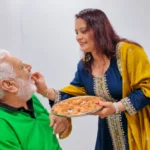
At PapayaCare, festivals are not something our residents watch from a distance. Navratri here means the ghat, the aarti every evening, garba in the hall, and the whole nine nights kept properly.
Our doctors and nursing staff are available round the clock, and our dietician plans farali and satvik meals for each resident individually, adjusted for diabetes, blood pressure and kidney needs, so that a vrat can be kept safely rather than given up.
If your parent lives with diabetes, heart disease or kidney illness and festivals have become worrying, we would be glad to help you plan them. See our assisted living and memory care programmes, or talk to our team.
Jai Mataji.