+91-9925390425
 +1-832-647-8304 (USA)
 info@papayacare.com

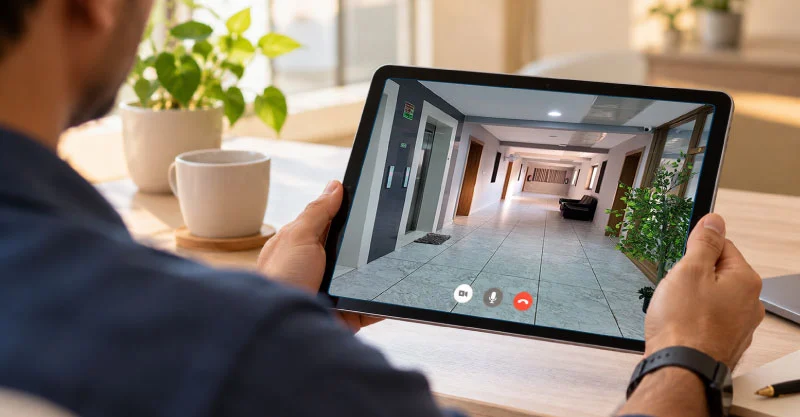
You cannot walk in. You cannot smell the corridor, watch how a nurse speaks to a confused resident, or check the bathroom in the far corner.
That is the hard part of doing this from Chicago or London or Melbourne. You are being asked to trust strangers with your parent, based on a website and a phone call.
It can be done properly. It just needs a method.
Why Remote Verification Is Different
- Every facility looks good on a brochure. Photos are the cheapest thing to buy
- Sales teams are trained for phone enquiries. You will speak to their best communicator, not their care staff
- You cannot judge by feel, so you have to judge by evidence
- You are usually deciding under time pressure, often after a hospital discharge
Before You Shortlist: What to Check Online
- Registration. Ask for their registration and licences and check the name matches the entity on the invoice
- Google Business Profile. Read the one and two star reviews first, then look at how the facility replied. The replies tell you more than the reviews
- Review pattern. Ten glowing reviews in the same week is a purchased batch. Steady reviews over years are real
- Photos in reviews. Family-uploaded photos are far more useful than the facility’s own
- Website consistency. Do the staff named on the site appear anywhere else, on LinkedIn or in local news
- Social media. Look for regular, ordinary posts of daily life, not only festivals and inaugurations
- Address. Put it into Street View and check the drive time to the nearest multi-speciality hospital yourself
The Video Call That Tells You Everything
One well-run video call replaces half a physical visit.
- Ask for a live walkthrough, not a recorded tour or a pre-made video
- Schedule it for late afternoon or early evening, when the day staff are tired and the facility is at its most ordinary
- Ask for one unannounced call as well, with only ten minutes notice
- Request that a caregiver or nurse holds the phone, not a manager
- Keep it long. Twenty minutes reveals things five minutes hides
What to Ask to See on Camera
Be specific. Vague requests get you the lobby.
- A resident room that is not currently prepared for viewing
- A bathroom in a far corner of the building, not the one near reception
- The kitchen during meal preparation
- The night duty register, showing who was on duty last night
- A medicine administration chart, with names blurred
- Residents in a common area, in the middle of a normal afternoon
- The emergency exit route and the nursing station
- A wide pan of the corridor, slowly, without cutting away
Watch the residents rather than the rooms. Are they dressed, groomed, out of bed, and is anyone speaking to them.
Questions That Expose a Weak Facility
- How many nurses are awake right now, and may I speak to one
- How long have your current nursing staff been working here
- What is your nurse-to-resident ratio at night, specifically
- How many minutes to reach a room at three in the morning
- Which hospital do you use, and who travels with the resident
- What happens to the fee if my father’s condition worsens
- Show me the fee at the next care level, in writing
- What do your staff do when a resident refuses to bathe
- How do you contact families abroad, and how quickly
Listen for hesitation more than for content. A facility that runs well answers these instantly, because they are asked daily.
Documents to Ask For, in Writing
- Registration and licence copies
- Itemised price list with everything billed separately
- Care plan template
- Emergency and hospitalisation protocol
- Staff qualifications for the nursing team
- Admission agreement, including notice period and refund terms
- Sample of the monthly report families receive
Ask for these by email. A facility that sends them within a day is a facility with its paperwork in order.
Speak to People Who Are Not Selling to You
- Ask to be connected to two families of current residents, ideally one who lives abroad
- Ask to speak to a nurse for five minutes, without a manager present
- Ask to speak briefly to a resident, if any are able to
- Search for the facility name in NRI forums and local Facebook groups
If a facility refuses all of this, that is your answer.
Appoint Someone Local
This is the single most useful thing you can do.
- Send a relative, family friend or trusted neighbour for one unannounced physical visit
- Give them this article and the same checklist you are using
- Ask them to check a bathroom, smell the corridors, and look at the residents
- If you have nobody available, some elder care coordinators in India do paid facility assessments
- One physical visit by anyone you trust is worth ten video calls
After Admission: Stay Verified
Verification does not end at admission. It changes shape.
- A weekly video call with your parent, with staff out of the room for part of it
- A monthly written report covering weight, sleep, appetite, mood, medicines and any incident
- Regular photographs of your parent, not of the building
- One named person you can reach directly, plus one escalation number
- Ask about small things. Weight, sleep and appetite move before serious problems appear
- Have someone local drop in unannounced every few months
Red Flags on a Remote Check
- Refusing a live walkthrough, or offering a recorded video instead
- Only the manager ever appears on camera
- Vague answers about night staffing
- No itemised price list, or “we will discuss on arrival”
- No families willing to speak to you
- Pressure to transfer a deposit on the first call
- Residents mostly in bed during the day
- Reviews all posted within a short window
Any two of these, move on.
Practical Notes for Different Time Zones
- Late evening in the US is early morning in India, which is a good time to see a shift change
- Mid-morning in the UK is mid-afternoon in India, when the facility is at its most normal
- Fix one recurring weekly slot so your parent comes to expect the call
- Keep one call each month at a time you have never used before
PapayaCare: What You Can Verify With Us
We are near Ahmedabad, and most of the families we care for have children living abroad. So we are used to being checked.
- Doctors and medical support around the clock, with nursing staff on duty through the night, not on call from home
- Trained, experienced care team including nurses, caregivers, physiotherapists and a dietician on site
- Tie-ups with leading hospitals, with staff accompanying any resident who needs admission
- 24/7 security and emergency response systems across the facility
- Live video walkthroughs on request, including unannounced ones, and scheduled video calls with your parent
- Monthly written reports covering health, weight, appetite, mood, activities and any incident
- A named contact person for your family, plus an escalation number that works across time zones
- An itemised price list given before you ask for it
Our services cover the full range of needs, so a parent does not have to move again as things change:
- Assisted Living
- Memory Care and Dementia Care
- Hospital Recovery Care
- Ortho Care and Rehabilitation
- Neuro Care and Rehabilitation
- Palliative and Personal Care
- Psychiatric Care
- Hospice Care
- Transitional Care
Bring the checklist above and use it on us. Ask for the corner bathroom, the night duty register and the nurse without a manager present.
Book a video walkthrough, see life at PapayaCare, or read what other families have said. If you would like to know what this costs before anything else, our cost comparison guide has the ranges.