+91-9925390425
 +1-832-647-8304
 info@papayacare.com
Introduction: Why Sleep Becomes a Challenge After 60
Sleep is one of the most vital pillars of good health, yet for many older adults, a full night of restful sleep feels out of reach. Waking up multiple times at night, struggling to fall asleep, or feeling exhausted despite hours in bed are not just minor inconveniences. They are signs that the body needs attention.
Sleep problems in seniors are far more common than most families realize. Studies indicate that nearly 50% of adults over 65 experience some form of sleep disturbance regularly. Poor sleep in older adults is linked to a higher risk of falls, memory decline, weakened immunity, depression, and worsening of chronic conditions.
At PapayaCare, we see firsthand how poor sleep quality affects a senior’s mood, energy, and overall health. The good news is that most sleep issues in seniors have clear causes and equally clear solutions.
Why Do Seniors Sleep Differently?
How Aging Changes Sleep Architecture
Sleep is not a single, uniform state. It moves through multiple stages: light sleep, deep sleep, and REM (rapid eye movement) sleep. As people age, the body naturally spends less time in deep, restorative sleep and more time in lighter sleep stages. This means older adults wake up more easily and feel less refreshed in the morning, even after eight hours in bed.
Circadian rhythms, the body’s internal clock, also shift with age. Many seniors begin feeling sleepy earlier in the evening and wake earlier in the morning, a pattern known as advanced sleep phase. This is a normal biological change, not a disorder.
The Brain-Sleep Connection in Aging
The brain produces melatonin, the hormone that signals the body it’s time to sleep, in smaller amounts as we age. Lower melatonin levels make it harder for seniors to fall asleep quickly and stay asleep through the night. Additionally, areas of the brain responsible for regulating sleep undergo gradual changes, making sleep lighter and more fragmented over time.
Common Sleep Disorders in Older Adults
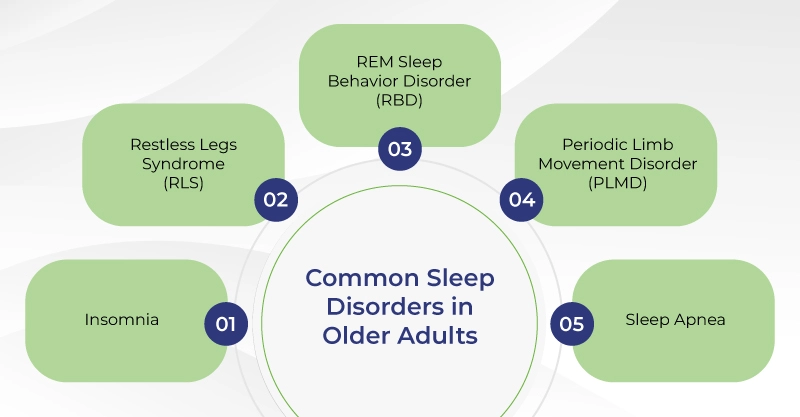
1. Insomnia
Insomnia is the most common sleep problem in seniors. It refers to persistent difficulty falling asleep, staying asleep, or waking too early and being unable to return to sleep. Insomnia in older adults can be short-term (triggered by stress or illness) or chronic (lasting three months or more).
Signs of insomnia in seniors:
- Lying awake for 30 minutes or more before falling asleep
- Waking 2–3 times per night
- Feeling tired, irritable, or foggy throughout the day
- Relying on daytime naps to compensate for poor nighttime sleep
2. Sleep Apnea
Sleep apnea is a condition where breathing repeatedly stops and starts during sleep. It is more common in older adults and significantly more prevalent in men. Many seniors with sleep apnea snore loudly, gasp during sleep, or wake with headaches, yet remain undiagnosed for years.
Untreated sleep apnea raises the risk of high blood pressure, heart disease, stroke, and cognitive decline. If a family member notices irregular breathing or loud snoring in an elderly loved one, a sleep evaluation is strongly advised.
3. Restless Legs Syndrome (RLS)
Restless Legs Syndrome causes uncomfortable sensations in the legs described as crawling, tingling, or aching that worsen at rest and create an irresistible urge to move. Symptoms typically appear or intensify in the evening, making it difficult to fall asleep.
RLS becomes more common with age and is often associated with iron deficiency, kidney disease, or diabetes.
4. REM Sleep Behavior Disorder (RBD)
In healthy sleep, the body is essentially paralyzed during REM (dreaming) sleep to prevent acting out dreams. In RBD, this paralysis fails. Seniors with RBD may shout, kick, or move during sleep. RBD is more common in older men and can sometimes be an early sign of neurological conditions such as Parkinson’s disease.
5. Periodic Limb Movement Disorder (PLMD)
PLMD involves repetitive, involuntary leg movements during sleep, usually every 20–40 seconds. Unlike RLS, the person is asleep and unaware of these movements. Partners or caregivers may notice the movements. PLMD disrupts sleep cycles and leads to daytime fatigue.
What Causes Sleep Problems in Seniors?
Understanding the root cause is the first step to finding an effective solution. Sleep disturbances in older adults rarely have a single cause; they are usually the result of several factors working together.
Medical Conditions
Chronic pain from arthritis, back problems, or joint issues is one of the most common reasons seniors cannot sleep comfortably. Other conditions that directly disrupt sleep include:
- Heart failure (causes breathlessness when lying flat)
- Gastroesophageal reflux disease (GERD)
- Frequent urination (nocturia) from prostate or bladder conditions
- Parkinson’s disease
- Dementia and Alzheimer’s disease
- Chronic obstructive pulmonary disease (COPD)
Medications
Many medications commonly prescribed to seniors affect sleep quality. These include:
- Beta-blockers (used for heart conditions) – can suppress melatonin
- Diuretics – increase nighttime urination
- Corticosteroids – cause increased energy and wakefulness
- Antidepressants – some disrupt REM sleep
- Decongestants and bronchodilators – stimulate the nervous system
Always discuss sleep side effects with a doctor before stopping or changing any medication.
Mental Health and Emotional Factors
Anxiety, depression, and loneliness are significant contributors to sleep problems in seniors. Retirement, the loss of a spouse, reduced mobility, or feeling disconnected from family can all trigger or worsen insomnia.
A grieving senior who lies awake replaying memories, or an anxious elderly parent who worries about health and finances, needs emotional support alongside any medical intervention.
Poor Sleep Hygiene and Lifestyle Factors
- Irregular sleep schedules (sleeping at different times each day)
- Excessive daytime napping
- Low physical activity
- High caffeine or alcohol consumption in the evening
- Too much screen time before bed
- A bedroom that is too bright, noisy, or hot
These factors are fully within our control, and addressing them can produce significant improvements in sleep quality.
How Sleep Deprivation Affects Senior Health
Poor sleep is not just about feeling tired. Chronic sleep deprivation in older adults has serious consequences:
- Cognitive Decline: Sleep is when the brain clears metabolic waste products, including beta-amyloid, a protein linked to Alzheimer’s disease. Consistently poor sleep accelerates this buildup and speeds cognitive deterioration.
- Increased Fall Risk: Fatigue impairs balance, reaction time, and muscle coordination. Seniors who sleep poorly are significantly more likely to fall, which can lead to fractures and hospitalization.
- Weakened Immunity: The immune system repairs and strengthens during deep sleep. Seniors who don’t sleep well get sick more often and recover more slowly.
- Worsened Chronic Conditions: Poor sleep raises blood pressure, disrupts blood sugar regulation, and increases inflammation, worsening heart disease, diabetes, and other existing conditions.
- Mood and Behavioral Changes: Irritability, agitation, withdrawal, and increased confusion in seniors are often misread as signs of dementia, when they may actually be symptoms of severe sleep deprivation.
Practical Solutions for Better Senior Sleep
1. Establish a Consistent Sleep Routine
Going to bed and waking up at the same time every day, including weekends, helps reset the body’s internal clock. Even if sleep quality is poor at first, maintaining a consistent schedule gradually improves it.
2. Optimize the Sleep Environment
The bedroom should support sleep, not work against it:
- Keep the room cool (between 18–22°C is ideal for most seniors)
- Use blackout curtains or a sleep mask to block light
- Reduce noise with earplugs or a white noise machine
- Invest in a supportive mattress and comfortable pillows
- Remove televisions, phones, and tablets from the bedroom
3. Manage Daytime Habits
- Limit caffeine after 2 PM
- Avoid alcohol close to bedtime, it may induce sleep initially but fragments it later
- Keep naps short (20–30 minutes) and before 3 PM
- Engage in light physical activity such as walking, stretching, or yoga but not within 2 hours of bedtime
4. Address Underlying Medical Conditions
If chronic pain, frequent urination, breathing difficulties, or anxiety are disrupting sleep, treating the root condition is essential. A doctor may adjust medications, recommend physical therapy, refer for a sleep study, or suggest cognitive behavioral therapy for insomnia (CBT-I) which is considered the most effective long-term treatment for insomnia.
5. Encourage Mental and Social Engagement
Staying mentally and socially active during the day improves sleep quality at night. Activities such as group discussions, reading, gentle crafts, music sessions, or time spent with family give the mind positive stimulation reducing the anxious, circular thoughts that often keep seniors awake.
6. Light Therapy
For seniors whose internal clock has shifted early (falling asleep at 7 PM, waking at 3 AM), bright light exposure in the late afternoon can delay the sleep cycle and produce a more natural schedule.
7. Melatonin and Medical Support
Low-dose melatonin supplements may help some seniors fall asleep more easily. However, these should only be used under medical guidance. Sleeping pills and sedatives, while tempting, carry significant risks for older adults, including increased fall risk, confusion, and dependency.
How PapayaCare Supports Better Sleep for Seniors
At PapayaCare, we understand that quality sleep is foundational to every other aspect of senior health. Our approach to sleep care is holistic and individualized:
- Structured daily routines that align with each resident’s natural sleep-wake cycle
- Comfortable, well-designed living spaces that promote restful sleep
- Trained caregivers who monitor sleep patterns and report disturbances to our medical team
- On-site medical support to evaluate and manage sleep disorders, medication reviews, and pain management
- Mental wellness programs, including music therapy, group activities, and emotional counselling, that reduce anxiety and improve nighttime rest
- Regular physical engagement through physiotherapy and guided movement sessions that promote healthy fatigue
Whether a senior is managing insomnia, sleep apnea, RLS, or general age-related sleep changes, our team works alongside families to develop a care plan that restores sleep quality and supports overall well-being.
For families considering assisted living services for their parents, sleep quality is one of the measurable improvements families notice within the first few weeks of a structured, professionally managed environment.
When to Seek Professional Help
Consult a doctor if your elderly parent or family member:
- Has not had a full night’s sleep in more than two to three weeks
- Shows significant changes in mood, memory, or behavior that may relate to sleep deprivation
- Snores loudly or stops breathing during sleep
- Falls asleep at inappropriate times (mid-conversation, during meals)
- Experiences distressing leg sensations or movements at night
- Has fallen recently and fatigue may be a contributing factor
Early evaluation prevents minor sleep issues from becoming serious health complications.
FAQs
1. How many hours of sleep do seniors need?
2. Is it normal for seniors to wake up multiple times at night?
3. What is the safest treatment for insomnia in elderly people?
4. Can poor sleep cause dementia in seniors?
5. Why do seniors wake up so early in the morning?
6. How does PapayaCare help seniors with sleep problems?
7. Are sleeping pills safe for elderly people?
Conclusion: Supporting Healthy and Dignified Aging
Sleep problems in seniors deserve the same attention as any other health condition because the consequences of chronic poor sleep touch every aspect of a senior’s life. From memory and mood to immunity and fall prevention, restful sleep is not a luxury. It is a medical necessity.
If your elderly parent is struggling to sleep well, a structured approach combining medical evaluation, lifestyle adjustments, emotional support, and the right care environment can make a profound difference. PapayaCare is here to support that journey, every step of the way.
For families in Gujarat and across India looking for professional senior care that puts holistic well-being first, we invite you to contact us or explore our assisted living services.